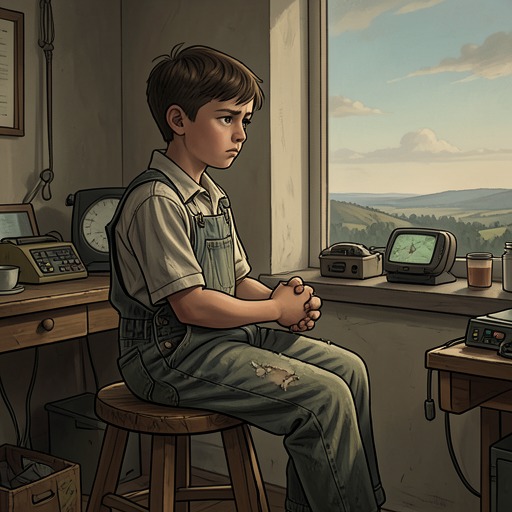
Captivity and freedom
The Tiger RisingCaptivity and freedom form a recurring ethical conflict in the novel, most sharply embodied by the tiger confined in a cage. Sistine sees the cage as an injustice that demands action; Rob initially sees the danger and responsibility of release. Willie May’s earlier decision to free a parakeet offers a painful counterexample to the belief that escape guarantees safety. When Rob and Sistine finally open the cage, the tiger does leave—but is later shot by Rob’s father, making freedom consequential rather than uncomplicated.
The Tiger’s Captivity and the Question of Ownership
Sistine names the tiger’s confinement as wrong and argues that he should be set free. Rob answers that they cannot change the situation, pointing to the locks, and resists the idea of releasing an animal that does not belong to them. Sistine recasts the question: the tiger may belong to Beauchamp, but, in her view, they have a responsibility to save him. Her certainty presses Rob to distinguish legal ownership from moral concern, while his hesitation reflects the practical danger of acting on that concern.
The cage is not merely a symbol in their debate. Rob knows that opening its locks could let the tiger out, and the prospect makes his legs itch. The consequences of confinement also sit within a material arrangement created by Beauchamp: he says the tiger needs meat twice a day and hires Rob to feed him for two dollars each time. Beauchamp considers using the animal to attract business to the Kentucky Star Motel or killing him for a coat. The tiger’s care, confinement, and possible death are thus subject to the owner’s choices, while Rob is made responsible for feeding him without being given authority over his fate.
Cricket and the Limits of Release
Willie May tells Rob about a green parakeet her father brought home when she was little. She could hold the small bird in her palm and feel its heart beating; she called him Cricket because he was always singing. Unable to bear seeing him in a cage, she let him go. Her father beat her and told her she had done the bird no favor, because it might become food for a snake. Willie May never saw Cricket again, though she says he sometimes comes through her dreams.
This memory complicates Sistine’s appeal to Willie May’s example. Sistine points out that Willie May once freed a caged bird, but Willie May distinguishes a bird from a tiger belonging to Beauchamp. Her refusal to tell Rob to unlock the cage rests not on indifference to captivity but on the unanswered question of what will happen to the tiger afterward: how will he live? Sistine argues that panthers survive in the woods, but the exchange leaves the risk unresolved. Willie May’s story establishes that an act of release can end captivity without securing the freed animal’s safety.
Opening the Cage
Despite his fear, Rob flings the cage door wide and tells the tiger to get out. The animal initially ignores the open door and continues pacing inside. Rob urges him on, but the tiger does not respond to the children’s expectation that he will immediately understand the opportunity. The delay makes the difference between opening a way out and controlling what happens next plain: the children can unfasten the barrier, but they cannot command the tiger’s choices.
At last, the tiger steps carefully through the opening, pauses, and then runs away across the grass. Rob watches him move farther from them and compares his motion to the sun rising and setting. The image gives the animal’s departure scale and rhythm, while Rob feels his own heart rise and fall as he watches. Sistine declares that freeing him was the right thing. Rob nods, but remembers Cricket, so the moment of apparent success is accompanied by uncertainty about the animal’s fate.
Freedom’s Consequences
The release does not resolve the tiger’s danger. Willie May has gone to get Rob’s father because she anticipated what the children planned and feared what the tiger might do once free; she says she wanted Rob’s father to save them. After leading the children back, she finds Rob’s father standing over the tiger with a rifle. The tiger has been shot. Rob confronts his father, saying that he killed the animal, and his father answers that he had to. The children’s action frees the tiger from its cage, but it cannot protect him from the consequences that follow.
The sequence refuses to make either captivity or release a complete moral answer. The cage represents a real deprivation that Sistine refuses to accept, while Willie May’s experience warns that escape can expose an animal to new dangers. The tiger’s careful exit and swift run make his movement beyond the cage visible; his death makes the limits of the children’s power equally visible. Freedom here is a consequential choice, not a guarantee of safety, and care requires asking not only how to end confinement but what a freed animal may face afterward.